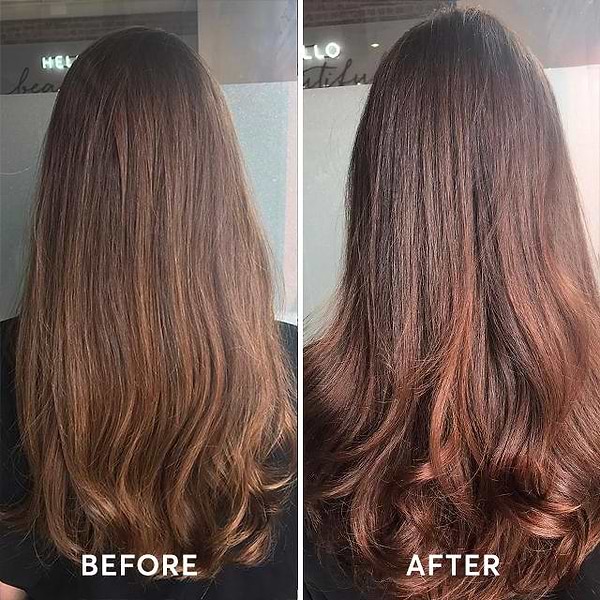
What Does a Hair Gloss Do?
A gloss does four key things:
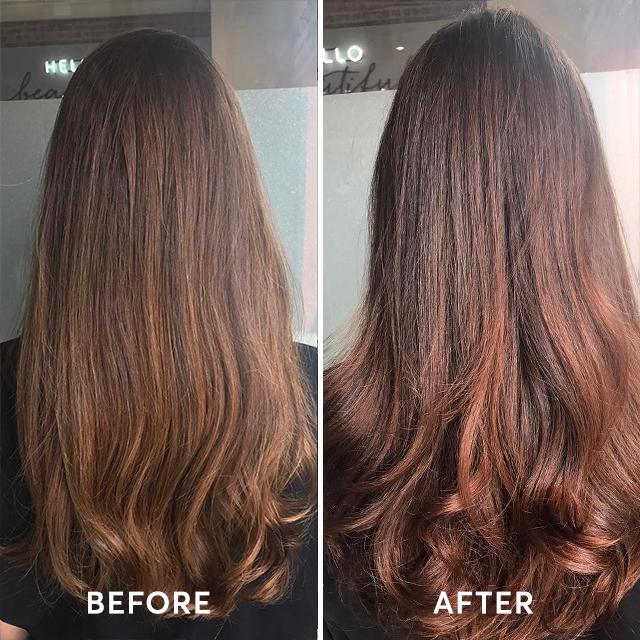
Refresh faded color and maintain between colorings
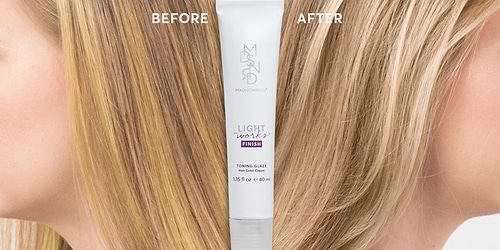
Correct yellow and orange tones that make hair look brassy
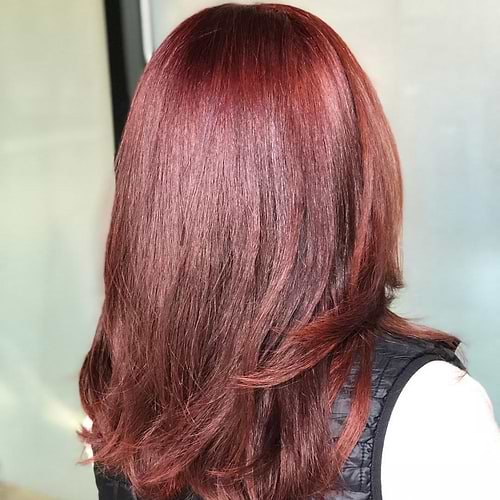
Add richness, depth, and dimension back to flat color
Add smoothness and shine
You do not need to regularly color your hair to use a gloss. A clear gloss adds shine to any hair, and a tinted gloss will tone uncolored hair, including natural gray or white. Color-treated hair is simply where a gloss performs best and most predictably, since those strands are already receptive to color.
What it does not do: drastically change color, lighten hair, or cover gray. A gloss deposits tone only, so if your goal is 100% gray coverage or you want to go more than one level darker, you want permanent color instead.
Porous hair takes gloss especially well. If your color normally goes very dark at first and then fades quickly, that is porosity; therefore a gloss will absorb and hold well on hair like that. It is also beneficial since it will not open the cuticle further the way permanent color would.
How Long Does Hair Gloss Last?
A hair gloss lasts 6 to 8 shampoos.How many weeks it lasts depends entirely on how often you wash. Because it fades gradually with every wash, there is no regrowth line to manage.
Two things make a gloss fade faster: frequent washing and hot water. If you want to stretch it, wash two or three times a week in cool water with a sulfate-free, color-protecting shampoo. More on that in our guide to how to make hair color last longer.
How Often Should You Use Hair Gloss?
Every three to five weeks, or any time your color starts to look dull or brassy. That rhythm lines up with how long a gloss lasts, so once you see your last application has faded, go ahead and apply another gloss, rather than waiting until your color looks tired or overly dull.
Use a gloss on color day too, not only in between
Colorists do not reapply permanent color down the lengths every time, because it builds up too dark and can cause over-processing on the hair. On color day, apply permanent color to your roots and a gloss to the mid-lengths and ends, and let them process at the same time. Your roots get full coverage. Your faded lengths get tone and shine instead of another round of permanent color.
How to Use a Hair Gloss at Home
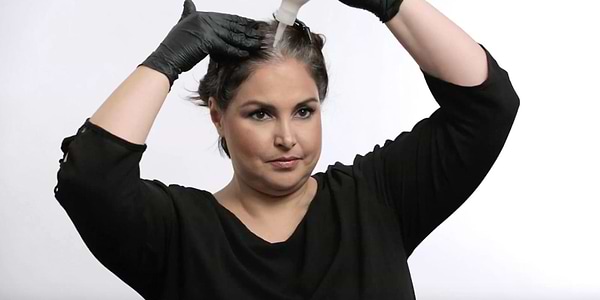
Glossing at home is a salon service you can do in your own bathroom. There is no developer to mix and no lightener involved, which is what makes it one of the easier at-home color steps to get right.
Apply permanent color only to roots and hair that has not been colored.
Apply matching hair gloss to the lengths and ends that you’ve colored in the past.
Follow instructions to finish the hair color process and style as normal.
Using a gloss on its own between colorings is simpler still. Put on the gloves included in your kit, apply the gloss all over, process for the time given in the instructions, then rinse. Choose your shade based on the color already in your hair. Since a gloss works with what is there rather than drastically changing it, choose a warm shade if you want to enhance your color or a cool shade to tone brassiness.
Hair Gloss vs Toner: What is the Difference?
These two overlap more than most comparisons admit. Toner is a category rather than a single product, and a tinted gloss can act as one. The practical difference is what each is built to do: a gloss is made to add tone and shine back to hair you have already colored, while a toner is made to cancel an unwanted undertone, usually after lightening.
| | Hair Gloss | Toner |
What it does | Deposits tone and shine, revives faded color, adds dimension | Cancels an unwanted undertone rather than adding color |
Best for | Color-treated hair that has faded, gone dull, or turned brassy | Blonde and highlighted hair that has gone yellow or brassy |
When you use it | Between colorings or at the same time you color just your roots | After lightening, or when highlights fade warm |
Lightens hair? | No | No |
Covers gray? | No | No |
At Madison Reed | Color Reviving Gloss | Light Works Toner |
Mixes with developer? | No | Yes |
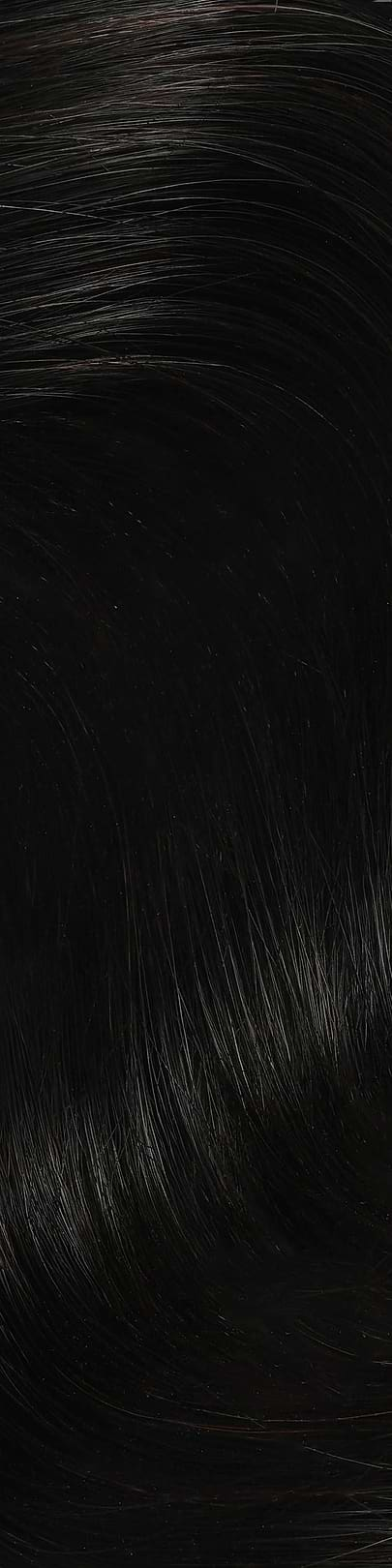
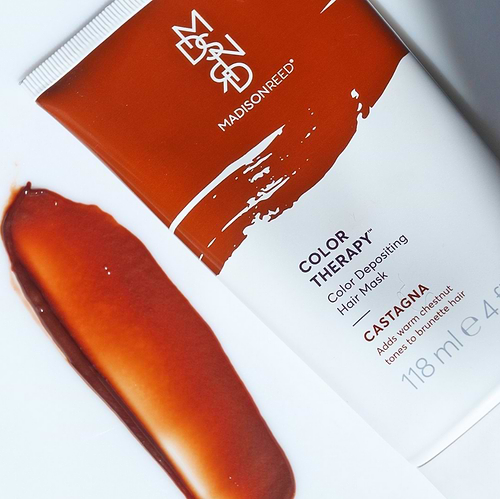
There are two Madison Reed gloss shades that do both jobs at once. Espresso adds cool ash tones that neutralize red orange tones that make brunette hair look brassy, and Crema is a cool violet that counteracts yellow in blonde and highlighted hair. If brass is the problem you are solving, start with those two.
A general rule otherwise: if your highlights have gone yellow or brassy, a toner is the more targeted fix. If your all-over color has gone flat or faded, a gloss is the solution. For how toning works shade by shade, see what hair toner is and how it works.
Gloss on Color, Highlighted, and Gray Hair
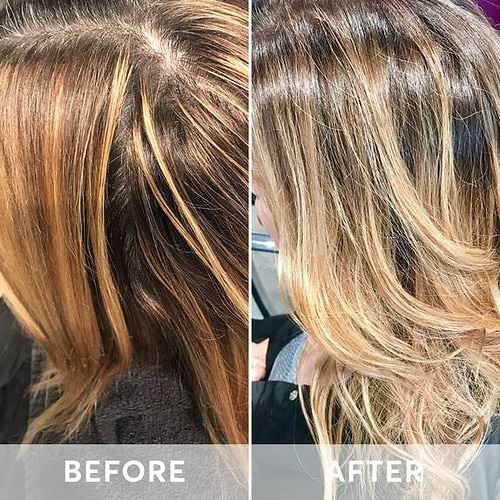
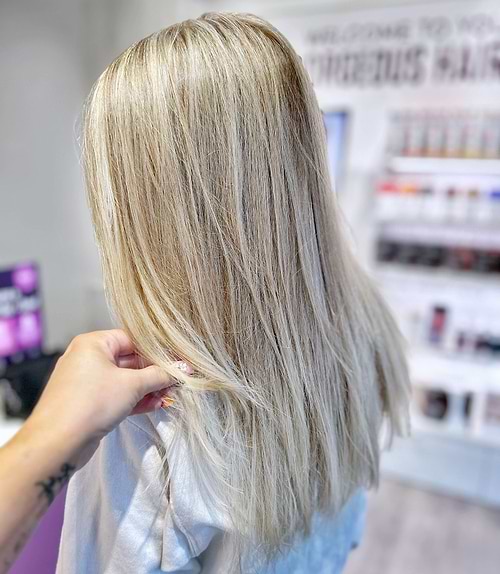
Highlighted hair behaves differently from the rest of your hair because it’s been treated differently. Even highlights that start out perfect fade over time and begin to look unnaturally light or yellow. That’s because natural yellow pigments remain in hair after lightening. A gloss lets you counteract that yellow without darkening the color of your highlights, and refine your overall color for a balanced look. Crema is the shade for that, a cool violet that neutralizes yellow and keeps highlights looking clean.
On natural gray or white hair, a gloss will not cover the gray, but it will tone it. Crema neutralizes the yellow that dulls gray and white hair, taking it toward a clean silvery white.
Choosing Your Gloss Shade
Hair gloss results depend on the underlying color. Every shade adds shine, and the tone you choose should work with the color already in your hair. See the full shade range, with what each one does on which base color, on our Color Reviving Gloss page.